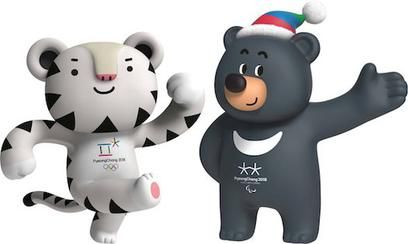
The torch relay started on 24 October 2017 in Greece and ended at the start of the Olympics on 9 February 2018. On 1 November 2017 the relay entered Korea. The relay lasted 101 days. There were 7,500 torch bearers to represent the Korean population of 75 million people. There were also 2,018 support runners to guard the torch and act as messengers.
The torch and its bearers traveled by a diverse means of transportation, including by turtle ship in Hansando Island, sailboat on the Baengmagang River in Buyeo, marine cable car in Yeosu, zip-wire over Bamseom Island, steam train in the Gokseong Train Village, marine rail bike along the east coast in Samcheok, and by yacht in Busan Metropolitan City. There were also robot torch relays in Jeju and Daejeon.
The Olympic events are held in the county of Pyeongchang, except for the ice events, which take place in the neighboring city of Gangneung, and downhill, super-G and combined, which take place in the neighboring county of Jeongseon.
The lead-up to these Games was affected by the ongoing tensions between South Korea and North Korea, and the ongoing 2017–18 missile crisis. These led to security concerns, with several countries threatening to skip the games if their safety was not ensured. In January 2018, after their first high-level talks in over two years, North Korea agreed to participate in the Games along with South Korea. The countries also agreed to march together, as a united "Korea", during the opening ceremony, and to field a unified women's ice hockey team.
Additional Waypoints
T07JGR6 - Open Space parking
N 39° 47.907 W 104° 47.436
Park here for free. A nature trail is North of the parking lot. Dogs and bikes allowed. No motor vehicles. No entrance fees.
 02-09-18 "Passion. Connected." PyeongChang
 | Difficulty:
  | Terrain:


 10
10